
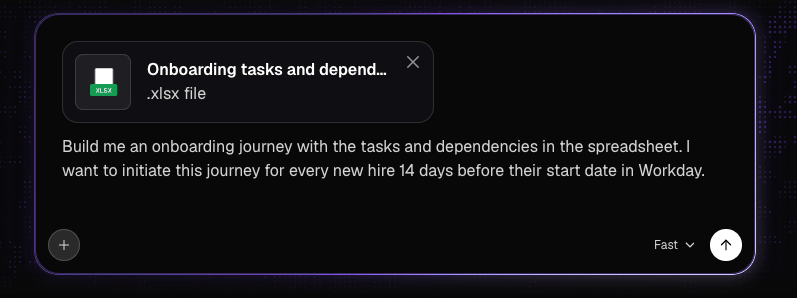
My summary of Serval before using it – Serval is a relatively new IT service management (ITSM) provider, covering workflows such as incident management and new system introductions.
How does Serval explains itself in the first minute? Serval’s homepage headline reads “Enterprise service management for the AI era”. It also highlights the automation of employee requests, onboarding and offboarding, just-in-time (JIT) access, and more.
How does Serval work? I’m particularly curious about Serval’s Catalyst, a builder agent that lets users describe a workflow in plain language. Serval generates readable TypeScript code, a visual step diagram and a workflow summary, so admins or security reviewers can inspect, edit and approve it before it goes live.
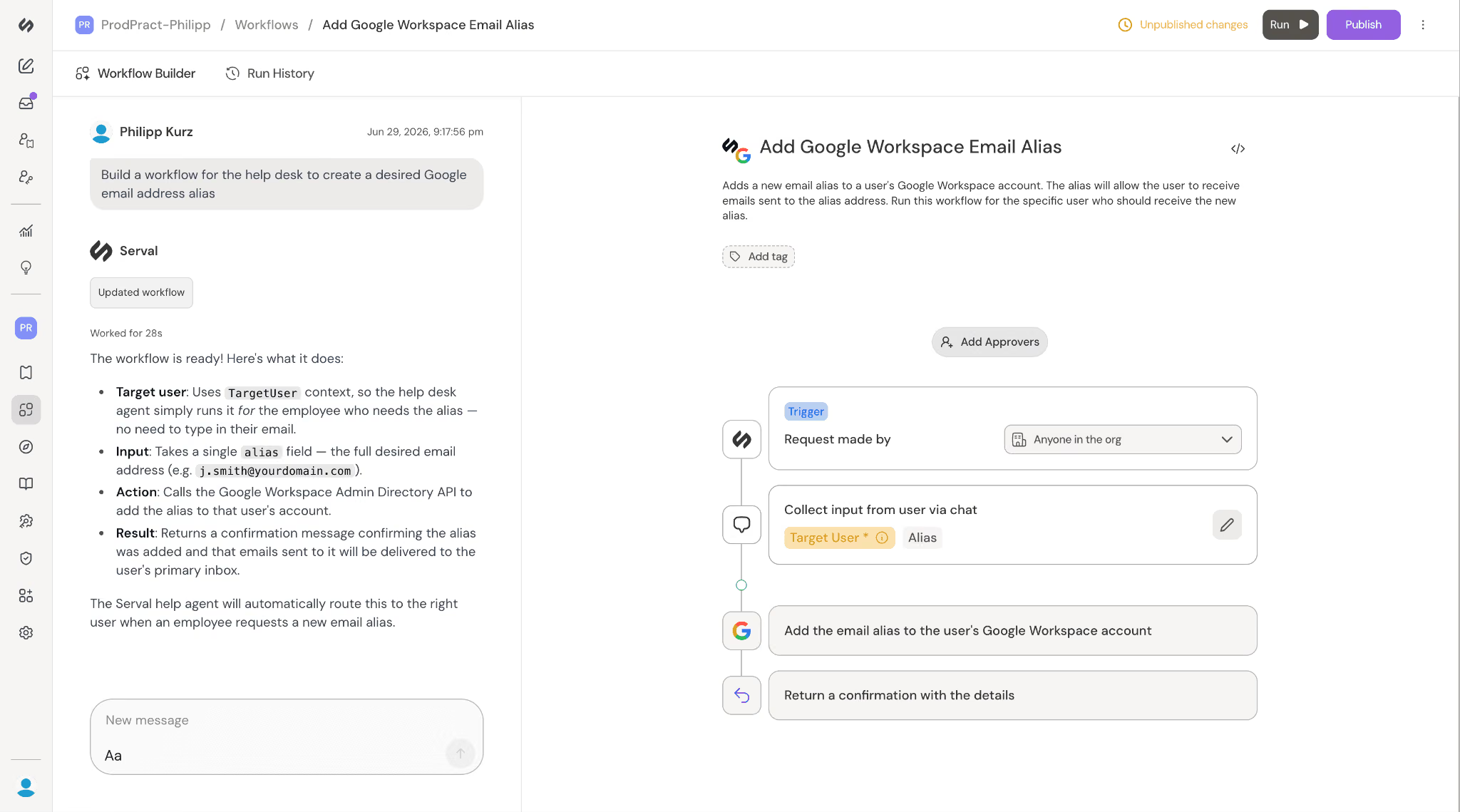
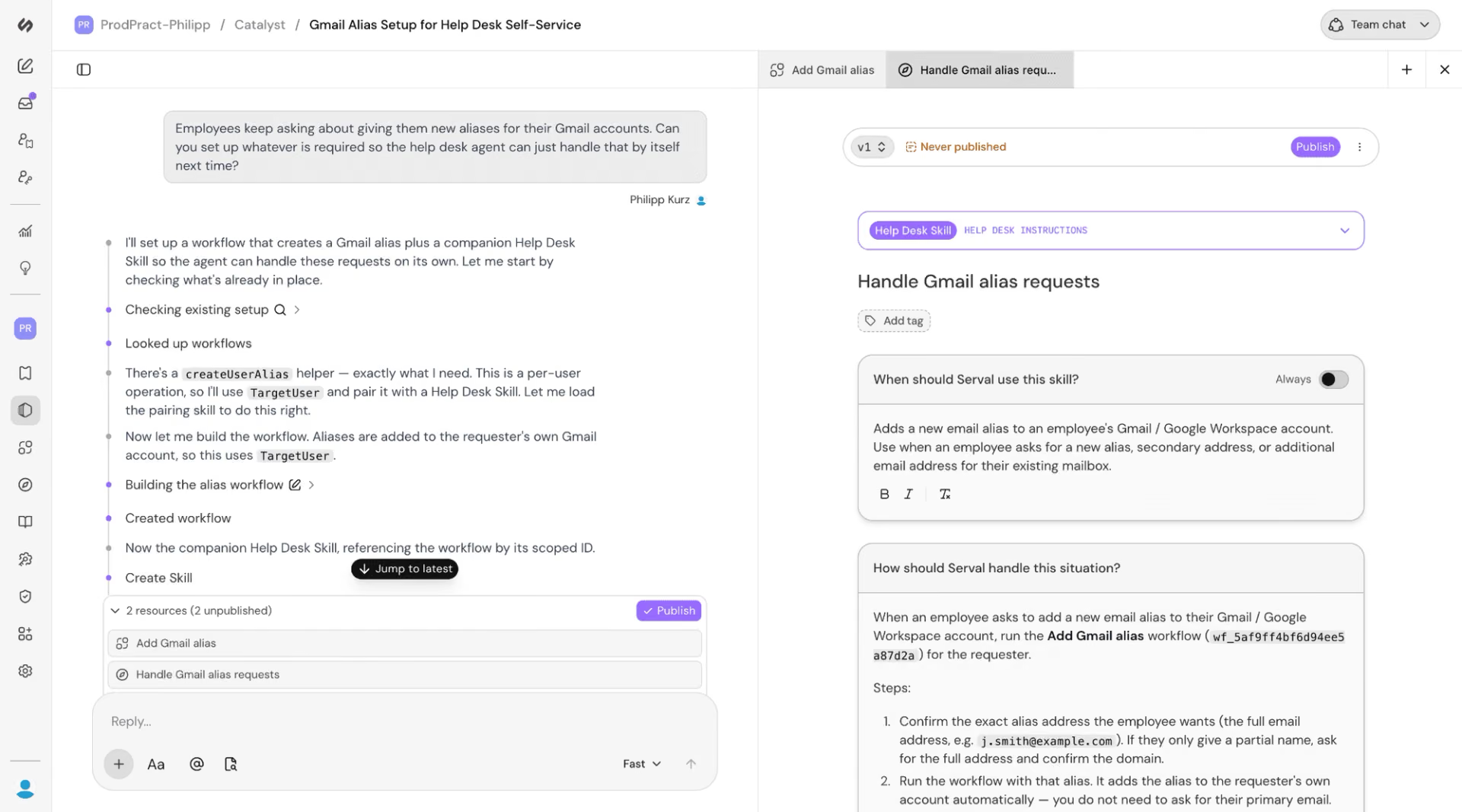
Catalyst is an AI workflow builder, and Serval promises it can automate almost any workflow. Users describe the outcome, plus the trigger and apps involved, and Catalyst generates the workflow:
- “When a new product manager joins my team, grant them access to Jira and Notion, then send them the onboarding pack.”
- “When a contractor’s engagement ends, remove them from the shared Google Drive folders and Slack, then post a confirmation to #people-ops.”
Serval positions Catalyst as the agent that can handle different workflow automations – think integration, permissions, triggers – in a single step. Catalyst searches your workspace for related workflows, tickets, knowledge and connected apps, asks follow-up questions when the request is unclear, and drafts the workflow for you through chat.
Serval’s differentiated positioning from established ITSM incumbents like ServiceNow and Atlassian comes down to three points:
- One platform rather than a bolt-on: Serval presents itself as a full-stack, AI-native ITSM platform. Its proactive agents work toward goals, investigate across connected systems, and draft or apply fixes.
- Positions itself as the system of record: Serval runs change, problem and major incident management alongside its own built-in Configuration Management Database (CMDB). This is store of IT configuration items (servers, applications, licences and the relationships between them) that ITSM tools use to understand how an organisation’s technology fits together.
ServiceNow and Atlassian already offer AI agent builders, such as Build Agent and Rovo. Serval’s pitch is a single system of record that moves from spotting an opportunity, to assembling several kinds of automation, to running proactive agents that keep looking for new work to automate.
Main learning point: Serval’s pitch is that automation should live inside the system of record, not beside it. Whether that holds in large enterprises, where replacing the core platform is the hard part, is what I’m curious about.
Related links for further learning:
- https://www.serval.com/blog/how-an-ai-it-workflow-builder-actually-works
- https://www.serval.com/blog/introducing-catalyst-automating-a-task-forever-should-be-easier-than-doing-it-manually-once
- https://venturebeat.com/infrastructure/servals-super-agent-catalyst-creates-roving-background-agents-to-identify-and-fix-it-issues-before-theyre-ticketed

