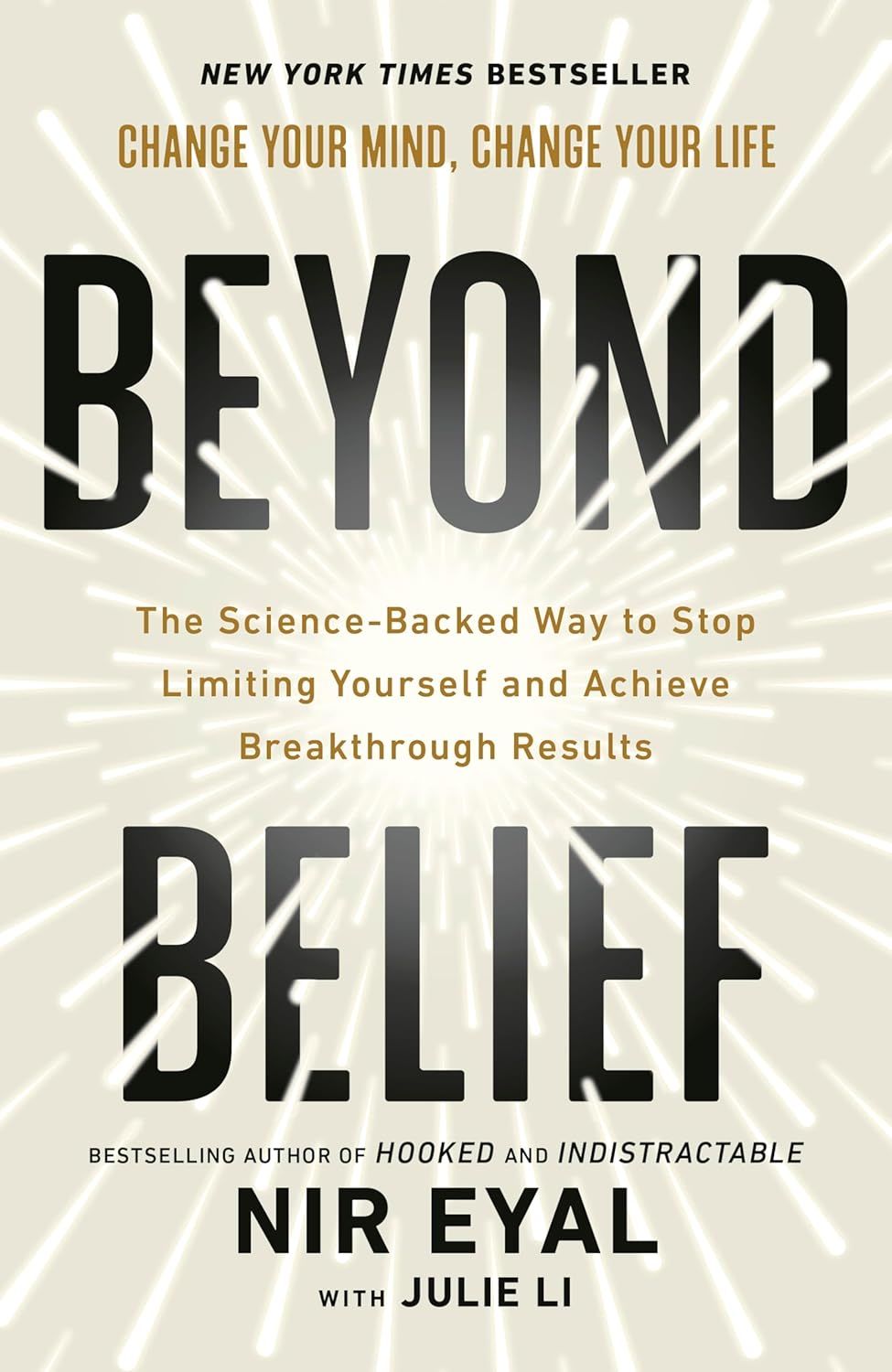
Limiting beliefs. I guess we all suffer from them, some more than others. In “Beyond Belief”, Nir Eyal and Julie Li write about ways to overcome our limiting beliefs, shifting our perception of beliefs from truths to tools.
The book is anchored around three powers of belief:
- Attention: the power to see what you believe – Paying attention to your deeply held beliefs, being aware of your judgement of others and questioning your beliefs. Doing this will unlock noticing opportunities that others might miss.
- Anticipation: the power to feel what you believe – Once a belief is activated, your brain generates predictions about what comes next. You then experience the feeling of that belief, which in turn reinforces it.
- Agency: the power to do what you believe – This is the power that turns belief into action. Treating our beliefs as tools means we can use them effectively in the face of challenges. People with high agency trust in their ability to respond effectively to whatever issues might arise.
We all have different beliefs about ourselves, others or the world. “I’m really bad at physical exercise” or “my colleague is always trying to get ahead.” Eyal’s book is about how we reframe beliefs and effectively use them as tools to achieve desired outcomes.
Attention: questioning beliefs, using evidence
To do that, we need to start by treating beliefs for what they are: opinions that are open to revision in the face of new evidence. What have you refused to see about yourself because shifting a long held view might feel uncomfortable?
This means we can look for evidence that contradicts our limiting beliefs. For example, if I believe I’m bad at exercise, I could question that and take a look at the number of times I went out for a walk in the past month.
You could also create a judgment journal in which you write down your strongest judgments from the day. Choose one belief you want to challenge, then find contradicting evidence or come up with an alternative perspective.
Anticipation: questioning anticipatory beliefs
Again, it’s about questioning your beliefs and how they lead us to anticipate certain experiences. Is this belief serving me, or am I serving it? Eyal talks in the book about “selective scepticism”: identifying areas where anticipatory beliefs might limit us. For example:
- Dreading going to work on Mondays? Question what you’re anticipating and see if you can reframe your negative beliefs. Ask yourself: is it as bad as I projected on Sunday night, or am I amplifying a narrative?
- Question negative assumptions like “it can’t be done.” Rather than accepting those beliefs, look for the fastest, cheapest way to learn whether your beliefs and assumptions are true.
Agency: personal agency and your locus of control
Personal agency is about believing in your power to make a difference and influence your own fate. Psychologists call this the locus of control, which measures how much control you believe you have over the events and outcomes in your life. Agency doesn’t mean having all the answers yourself. It means believing in your ability to find solutions and staying committed until you do. What has been holding you back? What’s the one step you could take today to prove to yourself that you’ve got more control than you’ve led yourself to believe?
Main learning point: “Beyond Belief” reframes our beliefs as tools rather than fixed truths, giving us three levers – attention, anticipation and agency – to work with instead of against them. The real shift is realising that most limiting beliefs are just untested opinions, and a small piece of evidence is often enough to start dismantling one.

