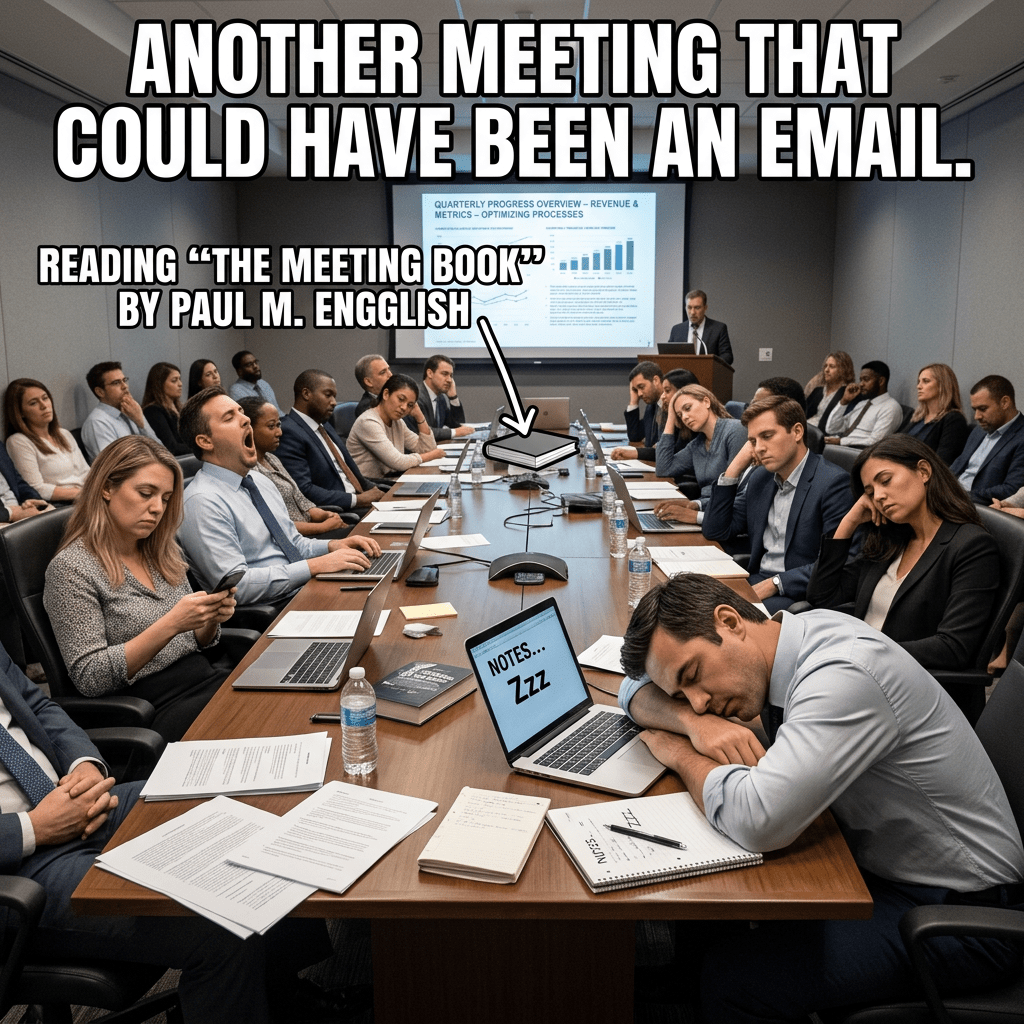
I’ve never been a fan of meetings. Bad meetings, that is. The ones that are ill-prepared (myself included, more often than I’d like to admit) or that just don’t seem to go anywhere. We’re terrible at counting the true cost of a meeting too, quietly adding another recurring weekly slot to the calendar without ever asking whether it still earns its place.
Paul English, co-founder of Kayak and several other businesses, reckons a strong meeting culture is entirely buildable, one that pushes a company forward rather than dragging it down. He’s recently published The Meeting Book, sharing his views and practical tips on how to get there.
English draws on best practice from companies like Amazon, Airbnb and Google. Amazon, for instance, is famous for its “six-pagers”, written documents (typically nine sections) that everyone reads silently at the start of a meeting before a word of discussion happens. It’s a small ritual, but it forces clarity before conversation, rather than the other way round.
At Airbnb, the emphasis is on having a strong moderator: someone empowered to steer the conversation and genuinely protect the agenda. Every meeting there gets held up against a set of basic questions:
- Does this meeting have a purpose and an agenda that proves it?
- Are the right people here? Are the wrong people here?
- Is there a moderator empowered to keep us on track?
- Are decisions being made? Is information being cascaded to others afterwards?
- Is our hybrid setup helping or hindering real participation? Are we using in-person time intentionally, or just by default?
- Does our roadmap guide our work, or does it box us in?
Google, unsurprisingly, leans on data, centring conversations on what the evidence actually shows. It also pushes for meetings to be short and decisive, treating 30 minutes as the default length rather than the automatic hour most of us still default to in our calendars.
English brings his own learnings from Kayak into the mix too, including a hard rule of a maximum of three attendees for meetings where action points are debated or decisions get made. Fewer people in the room, it turns out, tends to mean more people actually speaking. From these experiences, he’s distilled a checklist of five scheduling practices:
- Reduce the number of meetings. Run a calendar audit monthly. Cancel recurring meetings that no longer have a clear ongoing purpose.
- Shorten meeting length. Set shorter default durations of 15, 25 or 50 minutes. Have someone actively monitoring and calling time.
- Require a clear agenda and purpose. Set an agenda gate: no agenda, no meeting. The agenda must include the objective, topics, time allocation and decisions needed. Circulate it in a shared doc beforehand.
- Build a meeting-smart culture. Track and publicly share meeting metrics. Leaders need to model the behaviour by cancelling unnecessary meetings themselves.
- Ask four questions before every meeting. Is a meeting the only way to achieve this goal? What’s the minimum group needed to make the decision? What’s the smallest amount of time we can allocate? How will we know the meeting was successful?
The Meeting Book hasn’t turned me into a fan of meetings. It has, though, given me a sharper question to ask before I schedule one: are we here to decide something, or just to talk?
Main learning point: Before you organise a meeting, ask yourself: why are we having this meeting? What’s the desired outcome? Who needs to be there? And how will we actually achieve that outcome once we’re in the room?

