Ask ten people to define “strategy” and you’ll get ten different answers. There’s no shortage of books and frameworks to help us think strategically, but formulating and aligning on one is still a genuinely difficult exercise. I’ve found that the hard part isn’t defining the vision or mapping out the steps to get there. It’s the (tough) decisions we need to make along the way.

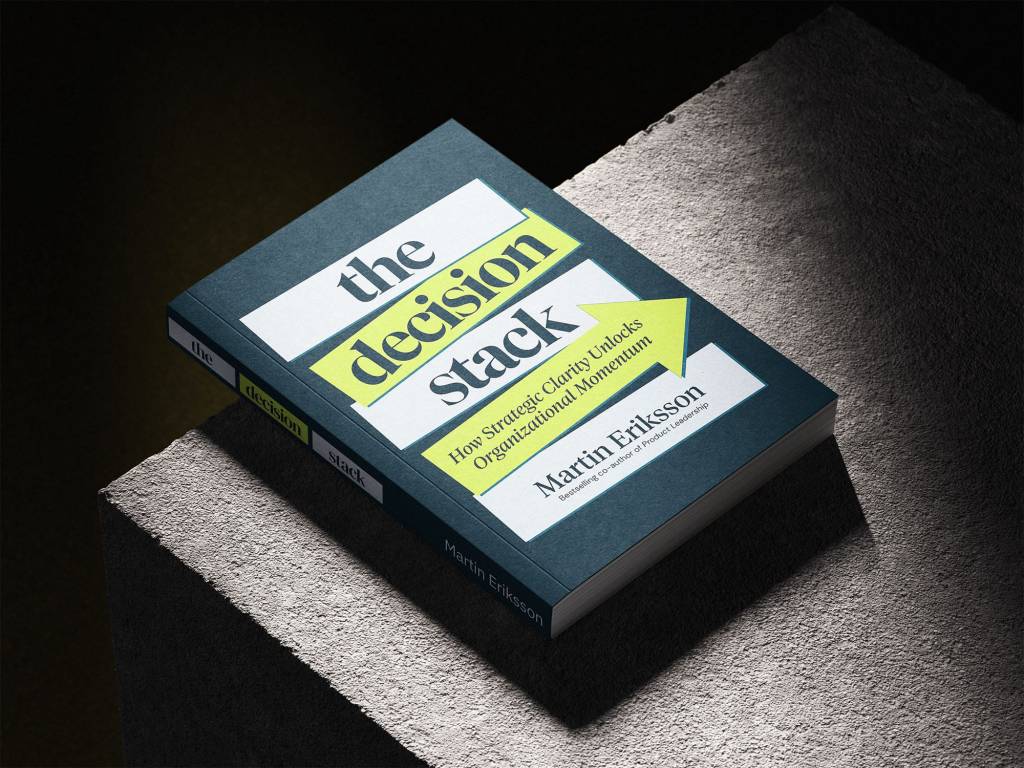
Martin Eriksson, a longstanding product leader, has written about how we can make these strategic decisions. In The Decision Stack , he shares a mental model for making the decisions that underpin and drive strategy. The framework is built on the premise that every organisation needs to answer five fundamental questions:
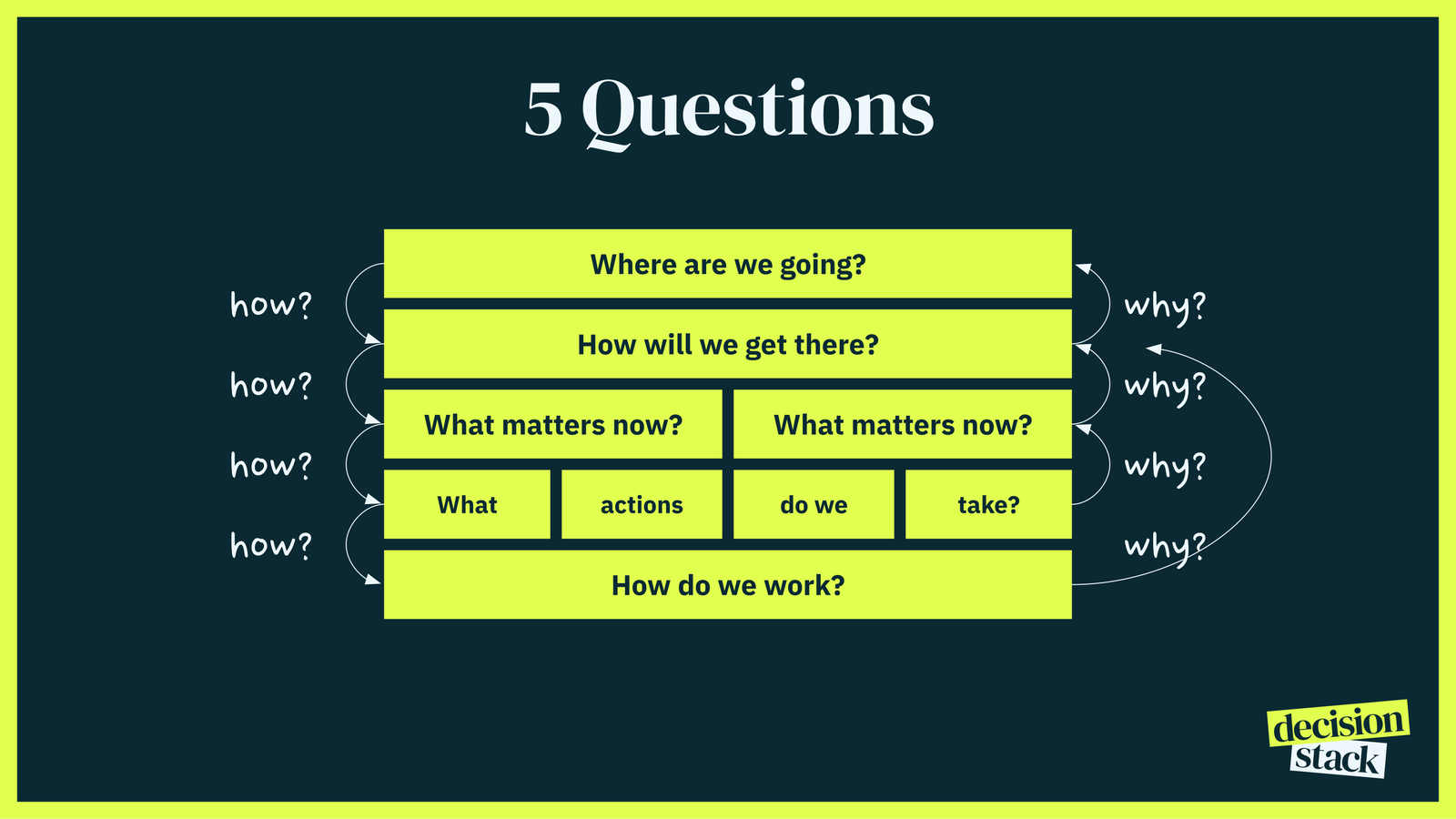
- Where are we going?
- How will we get there?
- What’s important now, and how do we measure progress?
- What actions are we taking to move forward?
- How do we make the right choices?
A clearly articulated strategy answers all five. It connects to the vision for your product or business. It makes explicit choices about your target market, where to compete and where not to. And it explains why those choices make sense. The Decision Stack helps us answer the five questions in a connected way, building a coherent logic from top to bottom.
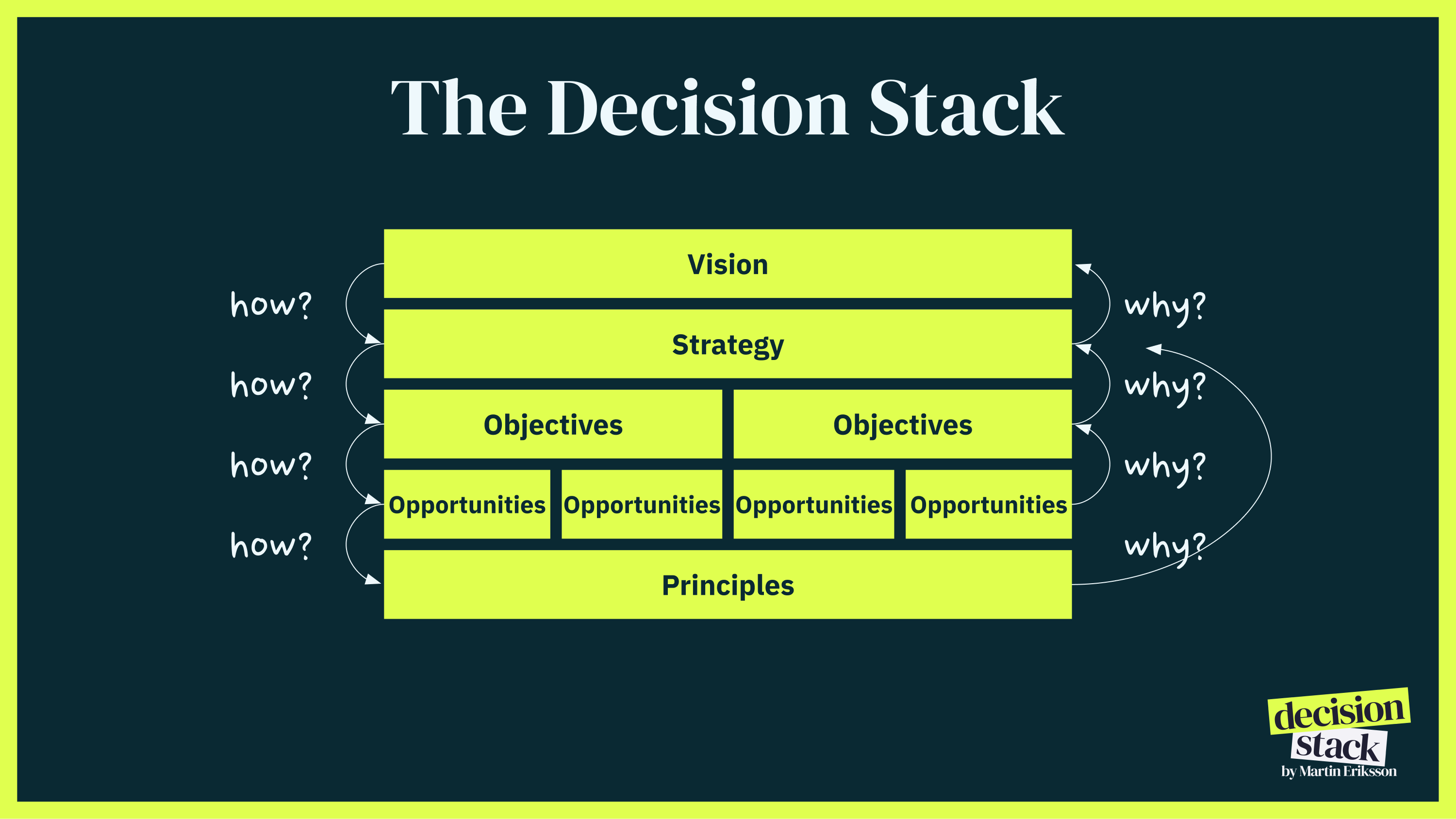
Each layer of the stack can be answered in different ways, but the outcome of each part is likely to look something like this.
Vision – Where are we going?
An effective vision is aspirational yet specific to your organisation or product, giving everyone a clear picture of where you’re headed. With that picture in place, people should feel empowered to make decisions and say “no” to things that don’t fit.
Rather than “to be the leading provider of ___”, a good vision should be rooted in a specific customer problem you want to solve. Eriksson shares Warby Parker‘s vision as a great example: “We believe that buying glasses should be easy and fun. It should leave you happy and good-looking, with money in your pocket. We also believe that everyone has the right to see.” It’s written in response to a real customer problem (buying glasses is difficult and unpleasant) and it defines what solving that problem looks like.
Strategy – How will we get there?
If the vision describes where we’re going, the strategy describes how we plan to get there. It’s a set of choices about where to play and how to win, and it should explain why those choices make sense given the current reality of your organisation or product. I like how Eriksson positions this as the core of your strategy, borrowing April Dunford’s definition of positioning: “Positioning defines how your product is a leader at delivering something that a well-defined set of customers cares a lot about.” Making these often difficult choices requires clear insight into your market, your capabilities and your competitive position.
Objectives (and Key Results) – What’s important now, and how do we measure progress?
Once you’ve got a clear vision and a strategy to get there, you need objectives to define what matters right now on that journey. Too often, I see OKRs that are mostly focused on outputs or initiatives. There are occasions where that’s the right call, for example when you’re fully confident about how to achieve a goal, or when you’re meeting a regulatory requirement. In most cases, though, you want to establish the objective and the result first, and only then think about which opportunities might get you there.
Objectives exist at both organisational and team level, with teams translating company goals into their own. They identify the key results tied to customer behaviours the team can directly influence, with a clear description of what success looks like: “increase the percentage of monthly active users who create at least one invoice from 12% to 20%” or “reduce the shopping cart abandonment rate from 68% to 55%.” Eriksson explains why most OKR implementations fail: they don’t connect to a broader strategy, or there are simply too many of them, leaving people unsure where to focus. Good OKRs, he argues, tell teams what customer behaviour to change, not how to change it.
What actions are we taking? – Opportunities (and Solutions)
For any given objective, there are countless opportunities you could pursue. The team’s job is to map those opportunities, prioritise between them, and then explore different solutions for the one they choose. Think about an opportunity to solve a different customer problem, or to enter a new market. This layer forces what Eriksson calls a “strategic pause”: is this opportunity actually worth pursuing given our objectives? Does it align with our strategy?
Each opportunity unlocks a set of potential solutions, and we need to be deliberate about which ones we prioritise. Solutions are like answers, and Eriksson urges us not to settle for the first one that comes to mind. He points to Teresa Torres’ Opportunity Solution Tree as a great technique for exploring the possibilities properly.
How do we make the right choices? – Principles
The final question in The Decision Stack is how we make the right choices. Principles make the trade-offs in your strategy explicit. They don’t just describe what you value, they clarify what you value more when two good options are in conflict. Eriksson talks about how “even over” statements can really drive this home: “profit margin even over revenue”, “margin even over market share” or “speed over perfection” are all examples of principles that guide teams in making everyday decisions, without needing to escalate every tough call.
Main learning point: The Decision Stack gives you a simple, connected way to link vision all the way down to the everyday trade-offs your teams make. It’s less a framework you finish and more one you keep checking your decisions against.

