

Real estate marketplaces have a clear commercial incentive to use AI well: the better they match buyers, renters and sellers, the more transactions they facilitate. I started by looking at Property Finder — a marketplace for the Middle East and North Africa (MENA) region, broadly comparable to Rightmove in the UK or Zillow in the US — and quickly found myself exploring how AI is reshaping this space.
What does Property Finder do with AI?
Property Finder’s most interesting AI feature is its Home Valuation tool — an AI-powered estimate that generates a property’s current value alongside a six-month projection. It draws on property type, comparable sales and local market trends to produce the estimate. I can see how Property Finder can use a combination of its own platform and external market data to continuously improve the accuracy of these valuations (and feeding into AI driven mortgage and financing solutions).
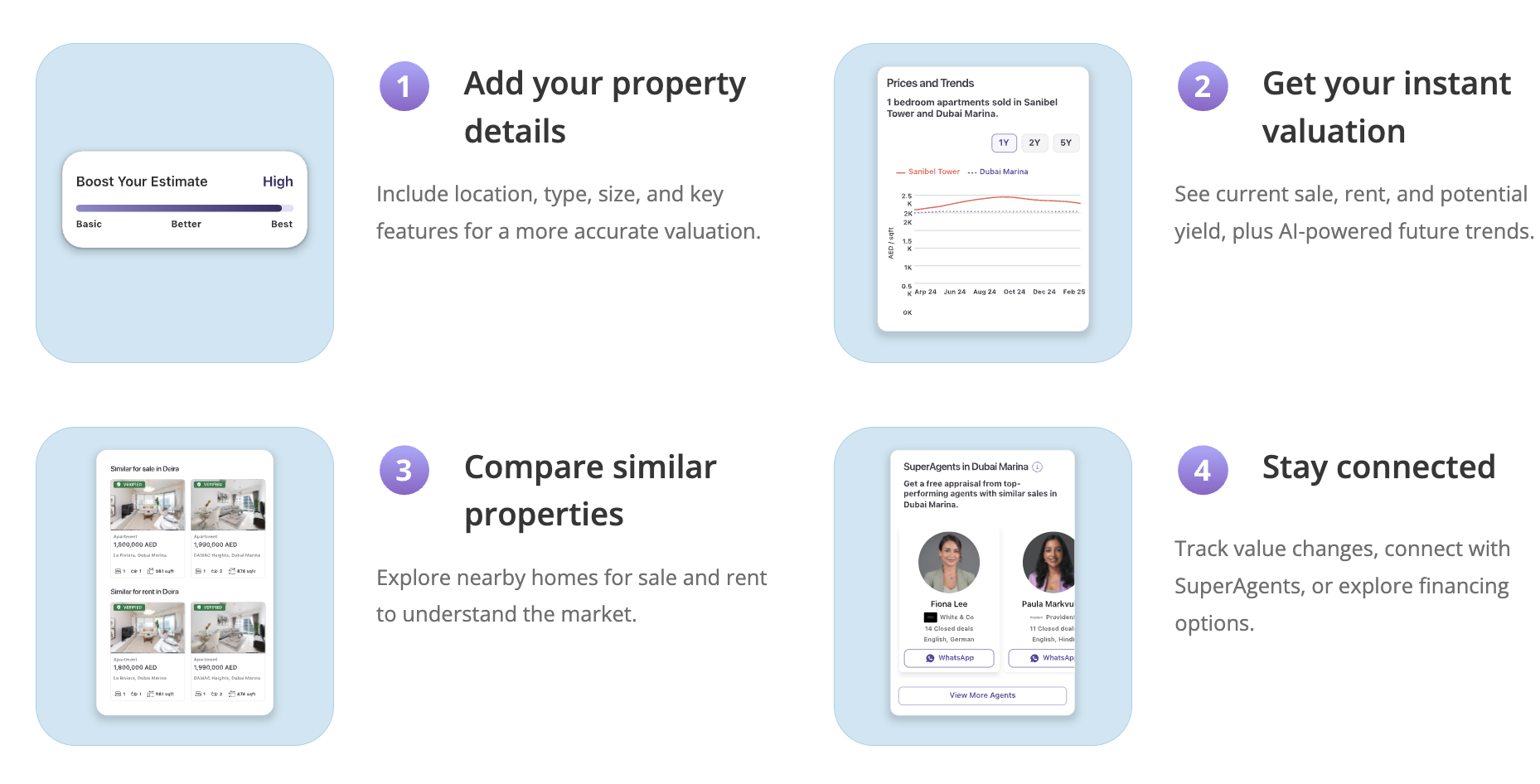
It’s a solid example of AI being used as a means to an end: give buyers and sellers a useful data point early in their journey, and keep them on the platform longer. That got me curious about how other major real estate marketplaces are approaching the same problem.
Zillow: conversational AI with a compliance layer
Zillow has introduced an AI chatbot experience aimed at buyers and renters who want quick answers before speaking to an agent. Sample prompts include questions like “How much would it cost to renovate this kitchen?” or “Should I buy or rent in this area?”

The real value of Zillow’s AI mode will likely depend on the user-specific context it builds up over time — remembering sessions, preferences and activity history. Combining that personal context with Zillow’s platform-wide data should, in theory, make the experience increasingly relevant and accurate.
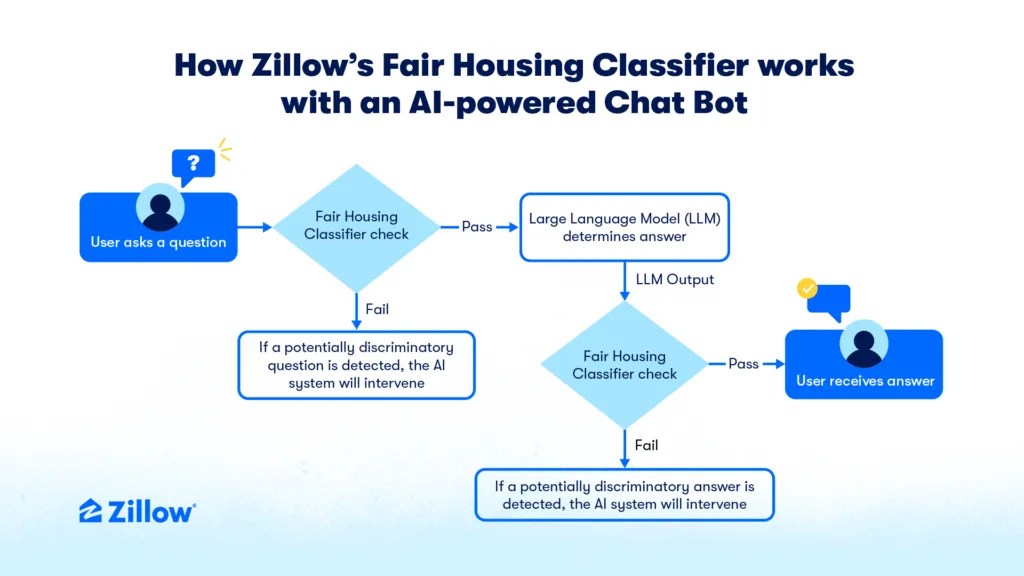
What I found particularly interesting is the built-in safeguard: Zillow’s Zillow’s Fair Housing Classifier. It monitors both user inputs and AI responses to prevent “steering” — the practice of nudging someone towards or away from certain neighbourhoods based on characteristics like race, religion or national origin, which is illegal under US federal law. When the classifier flags a potential violation, Zillow’s developers determine how the chatbot handles it. It’s an interesting example of a real estate platform building compliance directly into its AI layer from the start.
Redfin: conversational search
Redfin has taken a slightly different angle with its Conversational Search feature, powered by Sierra. Rather than a general-purpose chatbot, it lets users search for properties and comment directly on listings through natural language — blending discovery and engagement in a single experience.
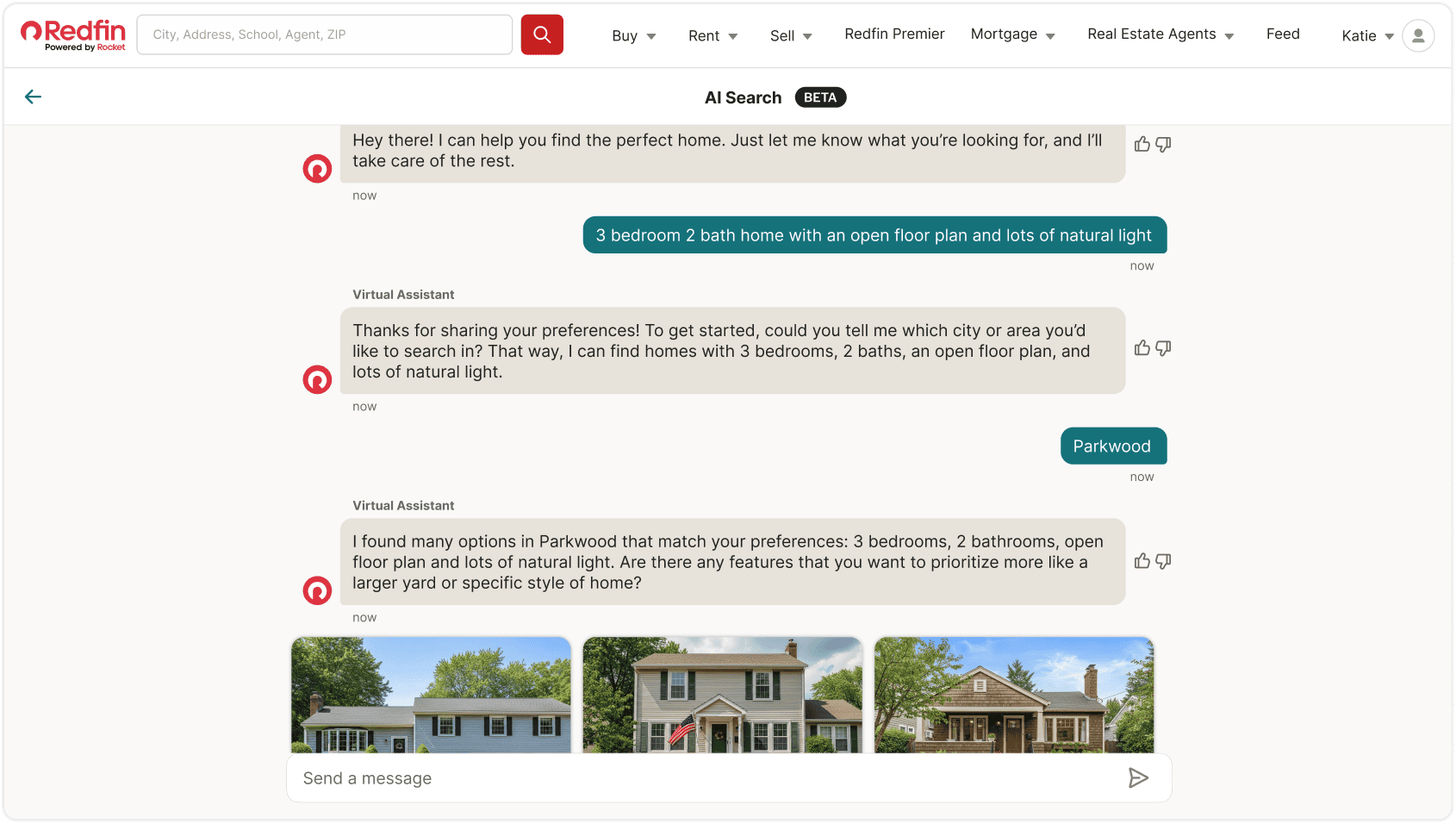
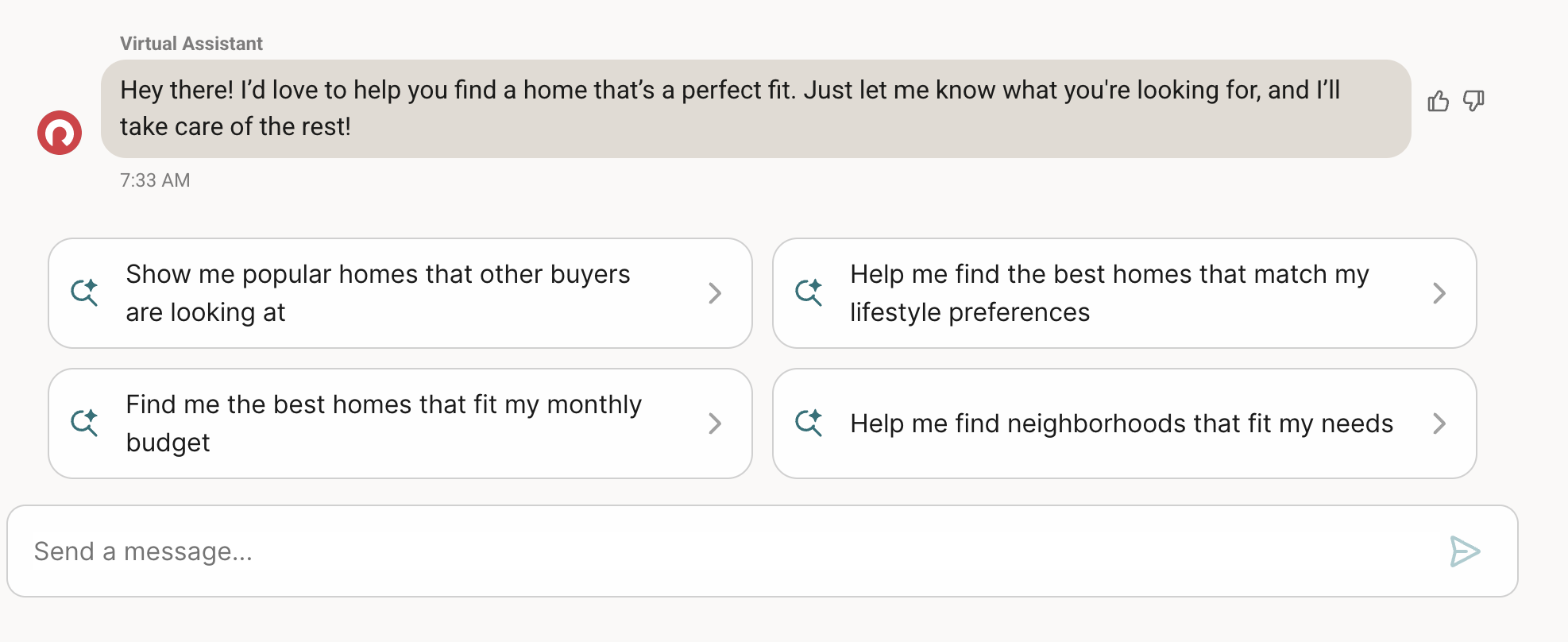
Clicking “AI search” on the Redfin site leads me to a standard chatbot experience. Redfin’s chatbot offers me some starting points to kick off my search such as “find me the best homes that fit my monthly budget.”

Main learning point: Real estate marketplaces are starting to use AI to do more than surface listings — they’re building tools that inform, guide and increasingly personalise the entire buying or renting journey. The next frontier is AI that spans the full transaction: from property valuation to mortgage and financing recommendations. When that happens, the roles of the agent and the mortgage adviser in the process starts to look very different.
Related links for further learning:
 As I learn ...