Ever wondered why some product teams struggle to scale? Why insights get lost, ways of working feel chaotic, and strategic decisions happen in silos?
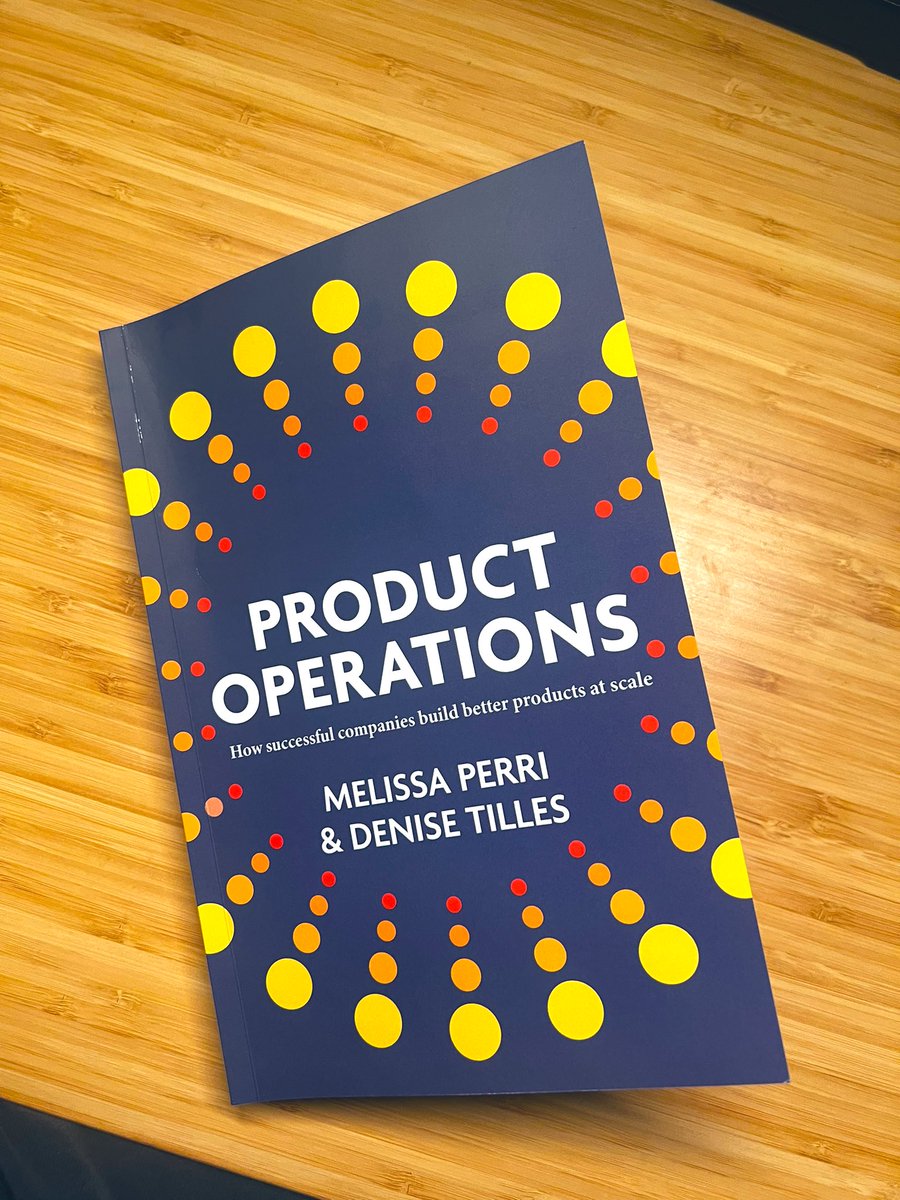
“Product operations is the discipline of helping your product management function scale well – surrounding the team with all of the essential inputs to set strategy, prioritise, and streamline ways of working.” This is how Melissa Perri and Denise Tilles define product operations in Product Operations: How Successful Companies Build Better Products at Scale.
I’ve previously written about product operations from a practitioner perspective and the book helpfully outlines the three pillars of Product Operations. Think of these three pillars as the foundation that prevents your product function from collapsing under its own weight as you grow. Let’s break down what each one actually means in practice.

Pillar 1: Business Data and Insights
The book explains how revenue and cost analysis are core to the product operations process, as a business’ financial activities inform product portfolio performance and alignment to business goals. Here’s the thing about metrics – they’re only useful if they actually connect financial decisions to product opportunities, either for a revenue generating product or an internal tool:
Relevant for revenue generating products
| Revenue | Total |
| Recurring (ARR) | |
| Non-Recurring | |
| Average Selling Pricing (ASP) | |
| Annual and Total Contract Value | |
| Bookings | Total |
| New vs Upsell vs Cross-sell vs Down-sell | |
| New Logos | |
| Retention | Net Retention |
| Gross Retention | |
| Churn | |
| Logo Churn |
Relevant for revenue generating products
| Engagement | NPS |
| Feature Adoption | |
| Support Ticket by Customer | |
| R&D Cost | Total R&D Costs |
| Indirect Product Costs in Other Budgets |
Relevant for internal tools
| Activity Cost | Internal Costs, e.g. Onboarding |
| Costs per Throughput Metric |
Pillar 2: Customer and Market Insights
The customer and market insights pillar enables external insights and feedback to make its way to the product team. I have seen teams struggle to utilise data stored in multiple different places. Think about data that we can get from customers on a regular basis, without doing a separate research push: sales win/loss data, support calls and customer reviews. The book talks about ways in which customer research can be streamlined, making sure that the right customers are engaged and that learnings are collated and accessed from a single place.
Market research isn’t an academic exercise – it’s about making tough calls on where to compete and which opportunities to go for. The questions that matter are:
- What’s the market size for each opportunity?
- Can we actually penetrate that market, or is it saturated?
- What is needed to play and to win in a specific market segment?

Pillar 3: Process and Practices
This pillar is all about creating a Product Operating Model, implementing the governance and planning required for regular conversations that enable responsiveness to market and business needs. Strategy is a living thing and we need to have regular strategic conversations to check progress and assess whether we need to adjust our direction. Cadences for strategic discussions and cross-functional touch points are two main pieces of governance that we need to consider for regular strategic discussions and making sure that teams are running smoothly.
Under the process part of product operations, we equip the team with the skills they need to do product management, as well as streamline the tools that these teams use to do their work. What ‘Just Enough Process’ looks like will differ per company, but there are some common areas of product management that will benefit from standardised processes: idea management, roadmapping, product toolkits and onboarding.
Idea Management
Product operations can help establish a process that gets the right information to the right teams, and then communicate back the status of the ideas to the relevant partners:
- Where can cross-functional partners and customers submit requests or ideas?
- How do we make sure the ideas are submitted in a format that is useful?
- How do we communicate the progress or status of ideas back to the right people?
Roadmapping
Product operations can help align your teams around which kinds of roadmaps are needed and how to produce them. Roadmaps are communication tools, and the product operations team can help create the right format for a specific audience:
- Product development teams: These are generally highly detailed roadmaps, require commitments from engineering by quarter, discover and delivery status, and are usually a quarter in length.
- Sales teams: Sales teams need fewer details. They need bigger-picture items that address problems and rough timeline on releases (either quarterly or half year). This is where the narrative / value proposition for each feature to customers is important to include as well.
- Leadership: These roadmaps focus on the “initiative to strategic intent” layer. They’re used to talking about dependencies and capacity planning, and follow quarterly timelines.
Product Toolkits and Templates
Toolkits provide guidance to teams on how to do the work. The toolkit concept clicked for me when I realised it’s not about bureaucracy or needless process – it’s about not reinventing the wheel every time someone needs to run an experiment or write a strategy memo. The book distinguishes three different types of toolkit:
- Discovery Toolkit – Focus on standardised templates for activities such as capturing experiment findings and creating personas.
- Strategy Toolkit – Providing templates to help communicating strategy to the rest of the organisation (e.g. strategy memos, product vision statements and strategy reviews).
- Go-to-Market Toolkit – Standardising templates for things such as go-to-market planning for a new product or feature, release notes and doing company product demos.
Main learning point:
With AI now being able to handle many routine product tasks, what does product operations even look like in two years? Will we need fewer insights and consistent practices or different ones? “Product Operations” gives you the foundation to answer that question for your organisation – but the evolution is already underway.
 As I learn ...